The Meursault Investigation

 Book Name : The Meursault Investigation

Author : Kamel Daoud

What is it about : In this short story, our man Harun presented the tale of his brother-turned-victim, Musa, in the famous book by Albert Camus, the Outsider (aka The Stranger). The book took the form of an investigative journalist interviewing Harun in an Algerian bar over a period of some seven days, with Harun regaling the story from a first person narrative perspective. Harun painstakingly recalled how his mother dragged his young self all around Algiers to find his brother, then only reported as "The Arab" who got shot or "The Victim" who was taken to hospital as all attention was focused on the French-Algerian murderer, who had no morals and drank coffee at his mother's funeral (as from the famous book). Years had gone past without Musa being found or even a grave being identified, then all of a sudden, a local female student turned up at the door step "... free, brash, disobedient, aware of their body as a gift, not as a sin or a shame... from the pre-Independence days ..." with the famous book, detailing all that had happened to Musa. As Musa's fate became clear, Harun found himself falling in love with the student.

Some thoughts after having read the book : A refreshing and innovative technique to write a sequel to a well known book (from another author) by describing the perspectives and angles of the victim's family from the original book and at the same time injecting into the story the immense background of the build up of a revolutionary Algeria on its way to Independence.

Would I recommend this book to you : A book well worth reading for its technique, drama and narrative style - reading Albert Camus's The Outsider beforehand, would be a pre-requisite to catch the drift of this book and experience the emotional roller-coaster.

The Tenth Man

Book Name : The Tenth Man

Author : Graham Greene

What is it about :
 In this novella set in WW II war-torn Paris , a middle-age lawyer signed away his complete fortune including the mansion he grew up in, in order to save his own life. All because our man Chavel drew the short straw which meant he would face the German firing squad at dawn; to avoid this rather unpleasant experience, Chavel signed a legally binding document to hand over all his assets to Janvier, who would take Chavel's place in the death squad line-up, with his family inheriting the mansion, stocks and all, after his death in the German's hands. With the war over, Chavel returned in disguise to his old mansion as a laborer to live amongst Janvier's family and even entertained the thought of marrying Janvier's sister. Things came to a boil when another prison survivor turned up at the mansion, claiming himself to be the real Chavel.

Some thoughts after having read the book : In this unlikely thriller, the plot twisted and turned and would have the readers holding on to the book until the end, the story would seem somewhat surprising and implausible but never mind. Readers should take note that the novella was set in an era of gentlemanly gaming and lady-like behaviour and not our nowadays, cynical grab-the-money-and-run ethics and shameless antics - so think of a good old black and white old-timer movie with the likes of Cary Grant and Deborah Kerr, where men folks took their hats off in greetings and grunted "Mam" and ladies would make apple pies in their ironed clean aprons. 

Would I recommend this book to you : A book showcasing concise writing and the art of novella writing at its best - great lesson on essaying techniques or even the making of a short stage-play.

The Tiger That Isn't - Seeing Through A World Of Numbers

Book Name : The Tiger That Isn't - Seeing Through A World Of Numbers

Author : Blastland And Dilnot

What is it about : In this book, the authors presented the ways to interpret and make sense of counting, survey, sampling, comparison, clustering, measurement, chance, target, size and other data-related information. All this information had been well talked-about topics, all too often appearing as eye-catching newspapers headlines - Happiness Index, School Ranking, Emergency Room Response Time, Operation Waiting Time, GDP Growth, Median Wage, Infant Mortality Rate etc. The book cut through all the patterns of stripes of leaves (red herrings and catchy sensationalism) and revealed the true "tigers" (significance) beyond.

Some thoughts after having read the book : Two of the examples mentioned in the book which I liked best, were the use of Key Performance Indices (KPI) to gauge the efficiency of the UK government departments and civil servants and secondly, the hospital emergency triage waiting times. I was especially impressed by many similar examples not because of the methodology deployed in these measurements but the ways the departments and hospital front line staff  used "gaming tactics" and "doctoring the data" by adjusting their work practices to give better looking numbers, all without the work being done or patients being treated. For instance, Patient Care as measured by the length of time a GP spent with each patient improved significantly to 10 minutes, not because the GP spent the time on diagnosis but rather spent the time on asking after the patient "How is Auntie Beryl and her cat doing?" Joke aside, the book presented many of these eye-opening examples of how deceptive "numbers" could be.

Would I recommend this book to you : A book welcomed and praised by all walks of lives including Bank Governors, Prime Minister Advisors, scientific communities and High Street newspapers for the book's clarity and cynical dissection of the motives behind these so-called surveys and KPI; as well as giving the general layman a few tools to understand the numbers, data and numerical information which we all had been flooded daily and thus avoiding the many pitfalls of being misled and misinformed - I would give a BIG thumbs up to this book and rank it A Must Read.

The Looking Glass War

Book Name : The Looking Glass War

Author : John le Carre

What is it about : The almost-defunct branch in the British Secret Service which dealt with military affairs of all shapes and sizes, had a surprising tip-off about a missile site in East Germany, and devoured this un-expected opportunity with all its hunger and energy by deploying out-of-touch and inadequately trained agents with rusty equipment and procedures twenty years out-of-date. The mission to discover and report behind enemy lines exploded in their face with some dubious help from their sister secret service which had ambitions of their own. The unfortunate agent Fred Leiser, a naturalised Pole, was last seen holding a knife across an East German girl's throat when the whole house was stormed by the East German police force.

Some thoughts after having read the book : Written in the very productive years of this great author, presenting in full view the cynical irony, ruthless betrayal and the hopelessness to re-live the nostalgia of a lost cause. Le Carre excelled here in describing the "Agent recruitment cycle" - hunted down the desperate (yes Fred, you would need a bob or two to buy a necklace for your new girl), fed their ego (yes Fred, you were always the best and was high on our list), kept up the visage of the glory and might of the old Department (yes Fred, the Department had never been in better hands), made Fred felt loyal to their handlers (yes Fred, we all salute you and wait for your triumphant return, your White Lady cocktail would be waiting) and when excuses ran out, plain deceit would do (yes Fred, carrying a 50 Pounds transmitter and crawling a couple of hundreds yards behind enemy lines would all go un-detected, no worries).

Would I recommend this book to you : Good Le Carre book to re-capture the haunting atmosphere in the Cold War era all those years ago and how agents were fed to the vultures whilst those in London moved on to the next recruitment - we all know the rules, don't we gentlemen ? A brilliant novel - heart breaking and at the same time the readers wondered almost aloud at the stupidity of it all.

The Curious Case Of Dassoukine's Trousers

Book Name : The Curious Case Of Dassoukine's Trousers

Author : Fouad Laroui

What is it about :
 A first book by this Moroccan author that was translated in to English , containing nine short stories with themes of humourous situations, frustration in life, identity crisis, vanity, wisdom and philosophy.

Some thoughts after having read the book : Nine short sketches showcasing the Author's ability to create, structure, flesh out contents, directing and forming dialogues for vastly varying scenarios. My favourite story was "What's Not Said In Brussels" - about a long distance relationship between an Amsterdam male and a French female who both had initially intended to end their affair where they had met, Brussels. But somehow, words were hard to come by and thus began a new phase in their lives. I would see this author going into writing stage plays, movie scripts and stand-up comedies.

Would I recommend this book to you : Colorful passages but at times the stories see-sawed between a joyful read and exotic wonderment to a farce and absurdity. I found the book to be great training materials for flexing one's grey matter and imagination as well as a mental challenge for keeping up with the dialogues and comprehending different writing styles and choice of phrases. Go try !

Committed To Memory 記憶的祕密

Book Name : Committed To Memory 記憶的祕密

Author : Rebecca Rupp

What is it about : Seventy Seven short passages detailing "How we remember" and "Why we forget". The author examined the amazing feats memory performed by living organisms as well as the astonishing fallibility of our memory as we used imagination and creativity to fill the voids of memory gaps, to make us feel better and even to re-write parts which we would like to forget. To quote Mark Twain "... I could remember anything, whether it happened or not ...". The best advice the book gave to forgetful people - interactive learning to make a deeper impression on the mind and by understanding what you try to remember, would go a long way to hold on to what we remembered. Also, an important finding resulted from one of the experiments - keeping up the process of learning and re-learning during the age between 50-60 years would be vital in maintaining memory at senility - a new chess game, a new language and new crossword puzzles could all help prevent memory loss at old age.

Some thoughts after having read the book : Hats off to all those lab rats who aided our scientists figure out how our memory worked by having their tiny brains sliced left, right and center, had all sorts of tracing elements injected as well as taking all those drugs and chemicals while STILL managing to perform the maze tests. The book reminded readers "don't believe everything you see" because seeing would be one thing, remembering quite another; and also even though many "in the room" witnessed the same incident, the testimonies afterwards would give varying accounts to the event as we all remember in different ways and paid attention to different aspects and objects. Not only that, various suggestive words might also induce and evoke totally different memory to the same chain of events.

Would I recommend this book to you : Good book on the Subject with witty and thought-provoking quotations from all walks of life - Twain, Dickens, Confucius, Homer, Kipling and Machiavelli etc. This would be just the book if you want a comprehensive, fairly in-depth and amusing account on this interesting topic. I learnt a great deal having read it.

Popcorn

Book Name : Popcorn

Author : Ben Elton

What is it about : The book centered on the theme : does life inspire films or do films imitate life ? And the second half : Just Who Is Responsible ? In this book, copycat killings along the Californian coast bear a close resemblance to the latest movies made by our director, Bruce Delamitri. Wayne and Scout, widely known as the Mall Murderers, gunned their way to notoriety and decided to pay Bruce a visit at his LA villa the night after he won the Oscar's Best Director Award. Mayhem broke out when Bruce, in the middle of seducing our gorgeous Playboy Centerfold, Brooke, discovered that the two killers were actually in his house, wanting to play a part in his life and eventual redemption.

Some thoughts after having read the book : The center piece with all the characters involved taking place at Bruce's LA mansion was one long affair, taking up two-thirds of the book - big on atmosphere and dialogues but slack on pace and progress, until right at the very end when the SWAT team stormed in and only a few survived the cross fire. A brilliant satire on the theme "In the USA, Who Is Responsible ?". Such an idea had long simmered under my subconsciousness when news of racial violence, gun killings and the poverty gap in the USA, made me wonder often. It was not until the chaotic and finger-pointing response to the onset of COVID and the million-plus subsequent deaths which finally brought home to me that in the USA, as Wayne Hudson, our Mall Murderer told Bruce Delamitri on Page 230, that "... there is an excuse for anything and everything in the USA ..." and " ... nothing is anybody's fault ...". 

The Epilogue was one of the finest and funniest wrap-up that I had ever read, basically, true to form, everybody blamed everybody else - the murderers blamed the Welfare Department for neglect, Bruce blamed the live TV audience for fanning the murderers' ego, the live TV audience blamed the media for not certifying the live broadcast Rated 18, the media blamed the Government for not having enough regulations, the Democrats blamed the Republicans (vice versa) and finally Scout, our female Mall Murderer, blamed religion since The Almighty did not intervene to stop the tragedy.

Would I recommend this book to you : Although the part on the hostage hold-up was a bit drawn out, it nevertheless felt quite a real life interplay between the roles involved. A brilliant satire about life in the USA and the book to a large extent, answered some of my long-puzzled questions. Go read !

The Memoirs Of Sherlock Holmes

Book Name : The Memoirs Of Sherlock Holmes

Author : Arthur Conan Doyle

What is it about : "Elementary, my dear Watson." The super sleuth came back with eleven mind-twisters for our dedicated fans of the Baker Street duo. Watson through his diary with Holmes closely observed and revered, picked out the best cases from years ago before he became the celebrity he was. In these memoirs, Watson jotted down the many mysterious events and cases the cold logician famously deduced and concluded; and honestly, in one of these cases - the Butler really did it. Moriarty, described by Holmes as "... the Napoleon of crime, organiser of half that is evil, genius, philosopher, an abstract thinker with a brain of the first order ..." made a dramatic entrance in the Swiss mountains, in The Final Problem, where quite likely, both Holmes and the master villain met their fate in dubious circumstances.

Some thoughts after having read the book : Always comforting to have Holmes on your side, especially the way he focused and made seemingly un-connected observations (all relevant afterwards, of course), casually picked out the crucial information and uttered his famous phrase "My dear Watson" and reached the Eureka moment. We managed to find more dimensions to our Holmes, like he took cocaine and was a messy person in life. Sherlock's elder brother, Mycroft also made an appearance from his much treasured hermit-like seclusion. My personal favourite was "The Naval Treaty", a real gem of a story where a most important Foreign Office document went walkies from an all-sealed room.

Would I recommend this book to you : Short essay writings at their very best; one vital skills in any story writing would be the choice of an enticing and intriguing title for the essay and here the book did splendidly with titles like : The Musgrave Ritual, The Greek Interpreter, The Reigate Puzzle and The Final Problem. Check out how this master storyteller created the mystery, conjured up the plot, held the readers' hand through the action and effortlessly solved the whodunit. Each essay packed with details, colors and dimensions where clues lied around aplenty for the readers to go-figure - Classy !

The Postman

Book Name : The Postman

Author : David Brin

What is it about : Seventeen years after the "Doom-War", with the nation in ruins and the people surviving in isolated land pockets and had reverted back to tribalism - each guarding, trading, warring and making peace with one another; our loner of a man, Gordon found the corpse of a long dead postal worker and he donned the uniform of this federal postman and play-acted himself and conned his way into communities for a hot meal or two, even going to bed with a few hotties, so we were told. Soon, Gordon re-invented himself as the only link between his made-up restored civilised world and these communities, convincing most of these simple-minded if suspicious folks but at the same time, he was himself increasingly antsy and guilty about the deception and the whole charade; all was going well until he found himself confronted with the sole surviving artificial intelligence computer, Cyclops - Cyclops' secret only generated more despair for our Gordon, read on.

Some thoughts after having read the book : Way too many passages were devoted to describing the landscape and numerous repetition of ambushes by the "Tech-Haters" and the violent looting "Survivalists". The story remained somewhat, at a superficial level which I did not feel the desolation or the cruel Darwinian aspect of survival after the nukes fell seventeen years back. Communities seemed almost happy and jolly at their harvest and trading, without a care of "The Future" - perhaps that was the helpless reality, after all. The story ended with Gordon moving on to further afield to "spread hope", it was a fitting if melancholy conclusion of the book - a loner trying to find motivation for himself to carry on in that post-apocalyptic world.

Would I recommend this book to you : Good book to pass a few rainy nights but the drama could be a bit more exaggerated to make the book more interesting - perhaps taking a nasty turn towards the "Lord Of The Flies" story line. I would recommend the book as a Thought experiment - what Life would look like decades after a doomed nuclear war; and by the way, in the film adaptation, Kevin Costner played Gordon and the film received mixed reviews.

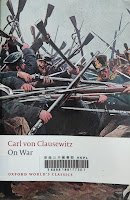
On War

Book Name : On War

Author : Carl von Clausewitz

What is it about : An "atomic" approach to the Subject by breaking down to the most elemental matters, all things related to military affairs, including war definitions and planning, battle preparation, supplies, training, psychology, diplomatic conducts, historical references, geographical aspects, mathematical angles and postures of attack and defense, the ranks and files formation, manoeuvres to out-flank the adversaries, the Do's and Don'ts in popular up-rising, guerrilla warfare pre-requisites and tactics as well as troop spirit and morale management. Examples given by the author would be mainly from the Napoleonic era, so readers should expect cannon balls, cavalry, mass deployment of soldiers, close quarter combat and Generals on horses in the book's description; not our present day drone strikes, laser beams, fighter aircraft and snipers shooting from a mile away.

Some thoughts after having read the book : Apparently all military personnel around the world had to slog through one of two books of this nature, the other one being the Chinese classic -The Art Of War by Sun Tzu (孫子兵法) dating back to 500 B.C. ! Well, our man Carl here waited long enough till the 18th Century, to come up with an European equivalent of sort. One important insight which I gained from reading the book, would be the author's emphasis on the superior difference in nature and outcome of Defense over Attack, which having thought deeper into this matter, I managed to comprehend the many examples in ancient and present wars relating both to Military campaigns and Trade barbs and the most important but often overlooked aspect of such engagements - Waiting and Timing; that would be, let time do its magic work by exhaustion of the Attackers, letting diplomacy and negotiation time to implement, enduring the blows until public opinion changed, making use of the emerging opportunity windows and finally dealing the fatal counter-punch.

Would I recommend this book to you : Dry as dust ! A hard read to start the year, although most of the book was a tough uphill struggle, I still managed to gain enough pleasure even though it meant the occasional re-read of paragraphs through a mounting headache. I would recommend this book for the purists and if analysis of all things military are your thing, then you should perhaps even own your private copy.

Meltdown

Book Name : Meltdown

Author : Ben Elton

What is it about : This work of fiction could very well be based on real life characters in the euphoric and dejected days of the "Noughties" - the years leading up to the financial crisis in 2009 triggered off by the US sub-prime mortgage debacle that swept the world and revealed those "not wearing swimming pants when the tides went out" as famously coined by Buffett. A bunch of friends who were Sussex University mates sharing a house in the student days who then went their own separate ways to become a Member of Parliament (Labour), CEO of a High Street bank, a Stock Trader and an Architect, kept in touch throughout those years and shared laughters and tears as they enjoyed the high-flying life and subsequently fought the crisis head-on, succumbed to debt and despair and rose from the ashes to drink to another day.

Some thoughts after having read the book : The author cast a keen eye on those years of free flowing champagne, mega City bonuses, over-the-top 5 bedrooms town houses (with an in-house lift to the underground car park with enough space for three 4x4s) followed by utter financial ruin through betting the savings on Ponzi schemes which promised astronomical returns of capital and re- and re-mortgaging which ended up with negative equity. The characters involved rediscovered what was important to life - a sound marriage, a sympathetic father who never said "I told you so" and the breakdown of prejudice social barriers; these Sussex mates would also experience the cold hard truth of "Every Man For Himself" when the faeces hit the fan, the blood-hounding of the media and in the case of our disgraced banker, Rupert, the past caught up with him in the form of a university fresher whom he unceremoniously pushed out of the shared house and now had a score to settle.

Would I recommend this book to you : I thoroughly enjoyed this book. Dialogues and set-pieces which real people would have lived out and the whole book was full of memorable wit and the author clearly demonstrated that he understood the signs and mood of those heady days and years. The flipping backwards and forwards of the events pre- and post- crisis gave a colorful contrast to the life style before the crash and the anxiety one would face after the crash - yes, Jimmy on paper still owned "a street", David's over the top half-finished architectural masterpiece remained an eye-sore on the London skyline and yet still no punters for Lizzie's O-So-Lovely butter-knife silver holder (500 Pounds a pair thank you). So what if the latest craze was Tulips, Dot-Coms or beautifully designed and packaged toxic Securities; somehow, human weaknesses would raise its ugly head and return one day to another "this time it's different" boom and bust cycle. A highly recommended book.

The Utopia Experiment

Book Name : The Utopia Experiment

Author : Dylan Evans

What is it about : The real life story of our forty-something Dylan, a graduate who specialised in robotics, the proud owner of a cottage in the Cotswalds and seemingly enjoying life with Socrates the pet cat. During a trip to Central America, deep anxiety surfaced about how he might be contributing to the end of human race as "machines" would take over and apocalypse followed. Upon returning to England, he sold the cottage to fund for his Utopia Experiment in remote northern Scotland to test what life would be like if all civilisation had been wiped out - no instant noodles, oven-ready pizza and definitely no toilet paper. Dylan would become gaunt and depressed out of guilt, sense of failure and poor diet and ended up in a psychiatric ward to recall better days.

Some thoughts after having read the book : I enjoyed the candid style, with no dramatic scenes, just the way he felt about the world and how he would want to get away and experiment with an alternative. I was somewhat shocked at how such an intelligent person went about destroying his world so wholeheartedly and seemingly not leaving himself a backdoor to escape or even a pot of money for his post-Utopian life or more sensibly starting with a "mini" version of the Utopia Experiment to test the waters - why not first go about life (in his cottage) without toothpaste, soap and electricity for a month and see how he would cope. But no ! Our man Dylan dived right in to the deep deep end by first setting up a leaky yurt in windswept Scotland, then he witnessed the comings and goings of fellow like-minded thinkers, some weird, some committed, some for a few joyful weeks and others left after taking a look at the mess that was the Utopia encampment. Dylan was definitely taking on too much too quickly, without a clue on the ins' and outs' of vegetable growing, leadership inspiration and relationship management.

Would I recommend this book to you : I would recommend this book to all those going through a mid-life crisis and thus itching to start afresh and create a brand new life - take note, if your ambitions and effort went too far, well beyond your comfort zone, you might just end up like our man, Dylan. An insightful real life story to appreciate how far we, the human race, had gone down the road to get "civilised". Reading Dylan's odyssey was like catching up with an old friend who really had a Story to tell.

One Hundred Years Of Solitude

Book Name : One Hundred Years Of Solitude

Author : Gabriel Garcia Marquez

What is it about : The many myths and legends of the Buendia family, whose humble beginnings and the co-founders of the swamp village of Macondo somewhere in south America, came to prominence through the family members' (mis-)adventures into wars, politics and feuds. Macondo could only be described as semi-developed with scorpions in the bathroom, surrounded by banana groves and only just recently had its first trains arriving; the village however did house a movie theater where teenagers snugged up on their first dates. The first half of the book described the central players who went through the plague of insomnia and temporary loss of memory of the entire village, encountered wizards and gypsies who came to the village with objects yet-unknown to the villagers which included ice, magnet, mercury, flying carpets, telescopes; also the ghostly presence of the wizard Melquiades would ensure the Buendia family's continuous effort in de-ciphering the mysterious ancient parchments. The second half of the book mostly concerned Aureliano the General who fought 32 battles, as Liberals against the Conservatives (Government) and who eventually surrendered to the government for the sake of peace. The next generations of the Buendia members were also introduced : the boisterous Jose Aureliano Segundo and his o-so-uptight wife, Fernanda and his attractive concubine Petra Cotes; Aureliano Segundo's twin brother Jose Arcadio Segundo, a seemingly rather straight laced sort of chap burst on the scene and led the banana workers' strike against the government and ended up as the sole survivor of the massacre. Macondo would eventually go through a period of continuous rain of 4 years, 11 months and 2 days, followed by 10 years of drought before being completely destroyed by a hurricane. Confused yet ? The last 5 pages of the book would unravel the fate of the Buendia family as the secrets of the ancient parchments revealed themselves. So read on ...

Some thoughts after having read the book : I could bet my bottom dollar that the readers would not be able to recall the immense details after reading each ten pages, as this prize-winning laureate sure knew how to spin a tale of incredible imagination. If only I had been warned of the delicious and enjoyable confusion throughout the book's many mini-plots; all loosely bound but yet closely knitted, it would have saved me the initial huge headaches in trying so-very-hard to piece together these mini-plots in logical and chronological sequences. I particularly enjoyed the little stories of the 17 sons our general Aureliano seeded all over the country and who all came back one day to the village of Macondo. The book just kept coming up with delightful and colorful characters such as the ever-so-slowly-aging grandmother Ursula lived to more than 122 years and who solely knew where the 7,214 gold coins were hidden, somewhere within a radius of 388 feet from her bedroom, Aureliano the respected General, Crespi the handsome and love-sick Italian pianola player, the simple-minded Remedios the Beauty, Fernanda the fallen aristocrat, Pilar Ternera, the madam in the brothel, Jose Aureliano Segundo who guzzled on champagne and life was just a long feast, the traumatised twin Jose Arcadio Buendia who took the only true version of the massacre to his grave; and who could forget the tragic and horrifying fate of the last Buendia baby (fire ants involved here).

Would I recommend this book to you : I would recommend reading this glorious book in ten pages' sittings as the reader would need good quality time to digest and appreciate the magical and mesmerising story-telling and the wild imagination and creativity flowing out of the pen of this great author. No need to bother with any logic, flow or understanding of this great book, just let the book take you through the glorious landscape and the weird but sublime characters ! Upon finishing the book, the readers would have an intimate understanding and be merrily confused about the happenings of this eventful village and its community; putting down the book was akin to leaving the Macondo world and would leave a huge void in the readers' coming weeks; a bit like having spent a great sojourn in a remote vacation spot and missing it even before one had left. A Big Book, A Stunning Finish and A Must Read.

The Girl In The Spider's Web

Book Name : The Girl In The Spider's Web

Author : David Lagercrantz

What is it about : Commercial espionage in the field of artificial intelligence through cyber-hacking would take centre stage in this new adventure of our heroine Salander and the now-down-but-not-out crusading journalist Blomkvist. Oh, also an autistic child with photographic memory and genius drawing ability would pull together all the loose-ends and characters in this story and Salander's twin sister, the o-so-cool and beautiful Camilla made a surprise mid-book appearance.

Some thoughts after having read the book : Perhaps because a different author had been contracted to write this installment of the Millennium Series after the original author's death, so the prose, style and pace differed greatly from the previous stories. Then again, the theme and chemistry of Salander the punk cyber-hacker criss-crossing paths with the investigative reporter, Blomkvist felt somewhat tiresome, exhausted and deflated and this story offered not much intrigue and I did not find dramatic exciting climax and moody build-up along the way. Also, one rather annoying aspect in this book was that, after having spent pages describing a certain character about his life, background, pets-hate, job etc. and the readers thus established an understanding and even an affinity to that character, the author would abruptly kill off the guy in a shoot out or something; so the whole book felt disconnected and the pace scuppered with these guys emerging slowly and dying quickly.

Would I recommend this book to you : I would recommend the earlier three novels by the original author; especially the first installment which had much more drama, atmosphere, mystery and depth. Go read that first installment : The Girl With The Dragon Tattoo and see how the "real" Blomkvist really dig into his investigations and Salander the cyber-punk cum martial arts killer could really kick some bad ass.

Partners In Crime

Book Name : Partners In Crime

Author : Agatha Christie

What is it about : A series of mini-plots showcasing this famous crime writer's logical thinking, talent, scene-setting skills, a keen eye and sharp sense of where and how a potential crime could be committed. Taking charge temporarily of the flagging Blunt Detective Agency, the stand-in crime-solving thirty-something married couple, Tommy and Tuppence, helped Agatha Christie sew together some intriguing whodunits which included Hunting down the Russian agent code-named Number 16; Breaking the un-breakable alibi alleged by a pair of twins; Seeing through the double disguises in a fancy dress party; Uncovering a treasured pink pearl hidden in a bar of soap; Straightening out the poltergeist in an ancient old house to find a long lost inheritance; and many more.

Some thoughts after having read the book : Very entertaining to see the creator of the well-known detectives Poirot and Ms Marple, amongst others, exercised her intellect and plot-thickening skills. Written in 1929, when gentlemen had manners and ladies behaved lady-like, the "old-time" English dialogues were delightful and "most civilised". The stories were made more interesting with the vivid supporting cast which included old Albert the butler taking up the role of a front-desk office "boy", keenly announcing the arrival of prospective clients requiring detective work done; the various walk-in big wigs from Scotland Yard, the local Chief Constable and Inspector General, all puzzled and clueless in their respective cases, but still all talked the authoritative talk, emphasising "... all's well and under control ..." and "... of course, I knew it, the villain/rascal/swine was never far from view ... splendidly done old chap ...".

Would I recommend this book to you : Definitely one of those how-to books where one could learn concise writing with witty and dramatic, yet down-to-earth conversations as well as scheming a plot and completing a jolly ending with the smoking gun revealed and the main characters escaped unscathed. Perfect book to while away the Summer lazy days.

The City Of Devi

Book Name : The City Of Devi

Author : Manil Suri

What is it about : In this work of fiction, the city of the goddess Mumba Devi, Mumbai or alternatively, the city named by the Portuguese as "Good Bay", Bombay would be destroyed in four days by an atomic weapon launched by India's fierce neighbour. Amidst the chaos of religious fervour and racial tension, a thirty-something Sarita set out amongst the bombed ruins, fallen buildings and wrecked trains in search of her husband, Karun, armed herself with the only pomegranate she could buy from the market, a symbol of her love as well as the cure and aphrodisiac for Karun's apparent impotent performance on the marital front. Sarita was joined by Jaz, a self-confessed homo-predator where all men with swinging buttocks, regardless of creed and belief would be his potential prey. Jaz, prided himself as the boinker and since his teenage initiation during a wrestling match with his cousin, Jaz had boinked his way around the world; men of all professions and nationalities had all been his boinkees. Karun happened to be one of these boinkees. Unknowingly, Sarita set out with Jaz in company, to search for their common lover.

Some thoughts after having read the book : Extremely good characterisation which left the readers in no doubt of where Sarita, Jaz and Karun stood in their respectively emotional corners. My personal favourite was the campy and colorful Rahim (Auntie), the all-so-gay cousin of Jaz, he was endearing, sophisticated and made a corner-stone impact on the story; the way he teased Jaz by dropping names like Jaz-mine and Jaz-Bond were some of the funniest moments in the book. Having said that, the promising start for the first two-third of the book with delicate and deft descriptions of the bi-sexual love triangle, somewhat degenerated into a farce - when Sarita and Jaz were taken up close to the human-goddess, Devi ma, a deformed eight-year-old with three limbs, to attend the goddess's little fireworks-filled fanfare of a religious celebration; yeh sure man, in amongst the bombed ruins and hungry masses just outside .... ha hum ... not exactly believable.

Would I recommend this book to you : Strictly PG Certificate with explicit and graphical scenes depicting debauchery and decadence. Plus one more warning for the homo-phobic and religion-minded readers, your stomach might just turn at reading a few of the set-pieces; the last third of the book was hard-going with the Bond-Villain theme and would be better off with a tragic-comedy ending. Otherwise, the book exuded wit, humour, street-wisdom and an engaging original story line. I would recommend the book on the basis for its odd and unique story line as well as foreseeing or offering a glimpse of our present "post-truth" information era - filled with half-truth, fake news and "alternative facts". PG Certificate.

The Feng Shui Detective's Casebook

Book Name : The Feng Shui Detective's Casebook

Author : Nury Vittachi

What is it about : Our Feng Shui master C.F.Wong, hailed from Singapore and his crack international squad of two : one nail-polish-yet-to-dry secretary - Winnie Lim and one cocky teenager assistant - Joyce McQuinnie, stormed Asia and solved the mysterious, illogical and mind-boggling cases of : murder by an explosive can of beef, car theft through architectural brilliance, kidnapping of fame-hungry Thai movie stars and tropical fish turned into deadly hobbies. Through his geomancer expertise of Yin-Yang, chi and numerous Chinese ancient methodology and techniques of force fields, wind directions, placements of meaningful objects, the color of the door mat and the positioning of the dining table etc., our man-about-town, C.F. Wong and his team solved the most difficult cases and helped out the local Asian police forces; all these crime-busting were done whilst not forgetting to bargain for a suitable Feng Shui consultancy fee before he casually passed judgement and gave answers on the murder cases.

Some thoughts after having read the book : Extremely witty and unique in that the stories combined Oriental and Western attitudes and viewpoints towards "real-life" incidents. Also, the characterisation of the main actors was clear and definitive : our Feng Shui master who had a "business" to run, was obviously concerned first and foremost with the budget, daily rate and prompt payment and to keep his biggest client Mr Pun happy; Wong's favourite past-time would be the daily review of the company's invoice and payment records which always brought a gratifying smile to the start of his day. Our teenage Joyce was the spoiler and mischief maker who was more concerned with making flirty eye contacts and lunch conversation topics with those muscular gym trainers and suspects or the smug exotic local detectives than in solving the cases for her boss. The final touch of the comical situation would be the occasional appearance of the trio of Miss Lim, who's nominal contribution to the stories would be her finishing off Wong's curry fish balls breakfast.

Would I recommend this book to you : Definitely a book for the beach and holiday when one would not want to be bogged down with heavy philosophies, brain-draining efforts and picky words and cumbersome plots - just a cold beer, the sun and the readiness for an all-out laugh !

The White Tiger

Book Name : The White Tiger

Author : Aravind Adiga

What is it about : Coming across a piece of news over the TV, our bottom-of-the-heap man from the Darkness (poor, under-developed and rural areas) Balram Halwai (The Lowly Sweet Makers caste) found out that the Chinese Premier, Wen Jia Bo would be paying a visit to India and was especially keen to meet a few of the famous Indian self-made entrepreneurs in Bangalore. So, over a period of seven nights, Balram regaled in a long letter to The Chinese Premier, how he too became one of these entrepreneurs; firstly, by being the smart guy in his class, like the legendary White Tiger which only appeared once in a generation; secondly Balram became the Primary Driver for a local rich family in the Light (flourishing corrupted Bourgeoisie and upper castes) by ousting the original driver over a nasty ploy and then, through tenacity, grit, brown-nosing, shamelessness, the murder of his American-educated mean master, and eventually through bribing the local police chief, our man Balram rose to become a respected member of the Bangalore business community and operated his own White Tiger Drivers Services.

Some thoughts after having read the book : Extremely entertaining, dark humour, cynical, downright ugly even, when the low-down's of India were given to the readers in a bare-knuckled and full-frontal assault style. Full of intriguing insights from the India's perspectives - especially the often-mentioned competition and comparison with China "... we may not have sewage, drinking water and Gold medalists, but we do have democracy ..."; "... parliamentary democracy, we will never catch up with China for this single reason ..."; " ... in Beijing they've got a dozen ring roads, here we have one and nothing is planned ...".

Would I recommend this book to you : One hundred percent YES - especially if your career would involve nasty business, shady deals and murder. See how a lowly Indian driver whose job profile included performing foot massage for his masters, fighting with other lowly drivers in the queue to fetch whisky from the liquor shop, being scapegoated for a hit-and-run traffic incident and generally being 24x7 available to his master's every whim to, become a master himself, through murder, paying off road victims, bribing officials and thence, the very quintessential streetwise Indian entrepreneur !

封神演義 巧讀

Book Name : 封神演義 巧讀 (The Creation Of The Chinese Gods)

Author : 許仲琳 明朝

What is it about : A classic work of fiction from an author in the Ming Dynasty (明朝), bringing together all the ancient legends and myths into a story of heroic proportion where the vain and corrupt Shang Emperor (商朝 circa. BC 1,600) was defeated by the uprising of the clan of Chau (周朝 circa. BC 1,100) where good gods battled against evil gods - essentially the history of 武王伐紂. To name just a few of the all-so-familiar characters and relevant figures in the story - 太上老君, 太乙真人, 姜子牙, 申公豹, 哪吒, 雷震子, 妲己, 土行孫, 誅仙陣, 萬仙陣, 哼哈二將, 狐狸精. These Chinese Gods had legendary abilities such as riding clouds to battle fields, submerge and escape underground when the battle heated up and the going got tough, killer beams coming out from their eyes, charging at enemies on monstrous fire-blowing beasts (often with a few heads and multiple limbs), extraordinary weapons such as flags which made your opponents faint when you waved the flags at them, nets and blankets thrown up in the air which would suck the weapons off your enemies' hands, mirrors which showed up the evil spirits (such as centuries-old tree, rock, bull, centipede, python and swine monsters) hiding behind their human forms ; and of course, those magical pills which took a thousand years to produce which would make the dead live again.

Some thoughts after having read the book : Extraordinary fantasies and way-out-there imagination could best describe this well-known Chinese classic. The heroes and villains involved in the story had all been familiar figures in every Chinese's childhood. One could think of the equivalent of X-Men where each "gifted" person would utilise their extraordinary abilities to zap, freeze, blow-away, electrocute, burn and vaporise their nemesis at the drop of a hat or a click of her fingers. On the one hand, this story was told with liberal embellishment and a satirical theme of well known historical incidents; on the other hand, this classic was told less in a fashion of bloody gore and glory but with more family fun in telling the interesting origins of each hero and villain, descriptions of dramatic entrance for the colorful characters into battle-field and the book conveyed many of the Confucian moral lessons in life. 

Would I recommend this book to you : It was pure joy to catch up with these fabled tales one had been so familiar since primary school days. Go ahead, re-live those magical moments when this book got your imagination all fired up. For non-Chinese readers, sorry, a bit of an uphill struggle for you to bridge the cultural divide - try reading and see for yourself. What's more though, one could learn many "Four Worded Idioms (四字詞)" which originated from this popular Chinese classic, examples included : 香消玉殞, 心血來潮, 背暗投明, 垂名竹帛, 凡夫俗子, 隨聲附和, 露面拋頭, 顛三倒四, 思前想後, 汪洋大海, 心血來潮, 陰陽交錯, 左道旁門, 出口傷人, 鏤心刻骨, 趕盡殺絕, 酒池肉林, 眼觀四處, 耳聽八方. Wow !

Imperialism - The Highest Stage Of Capitalism

Book Name : Imperialism - The Highest Stage Of Capitalism

Author : Lenin V.I.

What is it about : In a precise and matter-of-fact manner, Lenin penned this great insightful and clear-eyed work with his analysis on the state-of-play of Capitalism during his time, and he foresaw how logically following on from the initial intention of free trade, Capitalism would lead to the formation of monopolistic cartels, syndicates and Finance-Combined (mega banks with mega influence) and ultimately the inevitable rise of Imperialism where peace would be nowhere to be found in the world as imperialistic "groups of countries" would compete or go to war to satisfy the increasingly parasitic citizens of prosperous coupon-clippers, speculative share-holders and hopelessly needy welfare-seeking voters. Lenin also made a brief remark toward the end of the book, stating "... there is created a bond between imperialism and opportunism ...", of course - Opportunism, sadly now a prevalent political reality in our present day Western societies.

Some thoughts after having read the book : Lenin put together a masterpiece and an o-so-accurate dissection of Capitalism with succinct passages and analysis which came studded with bells and whistles - full of facts, figures and quotes from people-in-the-know (Marxists, Socialists, Capitalists, Imperialists, Reformists, Bourgeoisie alike), during those tumultuous times in the late nineteenth century of great mass awakening and enlightenment. Much of what he presented as well as the phenomena he described still permeated our present-day societies and would still ring true resonance this very day. In the Chapter headed The Division Of The World Among The Great Powers, Lenin quoting a then Imperialist-leaning British advocate " ... If you want to avoid civil war, you must become imperialists ... ", especially rang true to those present day informed readers in tune with current affairs, who viewed daily news with historical perspectives and hindsight. 

Would I recommend this book to you : Surprisingly easy to read and follow - not so much a book on ideology, but more a sober reflection and brutal attack on what he saw that was prevalent in his days and since, on the subject and implementation of Capitalism. A must-read for all political science students as well as anyone wishing to gain a clear insight in what actually had been going on this century. A most informative read !

Every Day Is Mother's Day

Book Name : Every Day Is Mother's Day

Author : Hilary Mantel

What is it about : The two main threads of the story : Mother and daughter Evelyn and Murial grind out their claustrophobic lives in a suburban two-up-two-down where mysterious events took place - Murial became pregnant inexplicably, the kitchen and the spare room often being occupied by "Them" and became a no-go zone and Clifford Avon, the long-deceased father of Murial had secret scandalous deeds in the garden shed. Second interleaved thread of the story : Our concerned social worker / case officer, Isabel, had more than her fair share of frustration when dealing with the mother and daughter, and was at one point being forcibly locked up on the attic by the increasingly paranoid mother, Evelyn; Isabel's other pre-occupation was her dead-end adulterous affair with Colin, father of three, who at the very least helped her recover the lost case file from the now-famous Christmas party.

Some thoughts after having read the book : Sub-plots perfectly interwoven with mind-boggling contrast - on the one hand, a weird family of mother and daughter driving the Social Service workers mad with fear and on the other hand, our suburban History teacher Colin having a mid-life crisis and hoping to escape by having an affair with one of these social workers, Isabel, whilst his poor, rather big-feet unattractive wife was pregnant with their latest. Just as an example of the amusing yet spooky little episode in the story : Evelyn (the weird mother) went shopping for meat in her local butcher's and met up with her neighbour who knew about Evelyn's "side-profession" of being a Spiritualist/Medium-To-The-Other-World and proceeded to tell Evelyn that her Uncle Reggie passed away a few weeks back and the family could not locate his insurance policies and could Evelyn be so kind as to drop by the house and call up Uncle Reggie and ask him where he had hidden the policies ! 

Would I recommend this book to you : Tightly written with excellent scene-setting and insightful depictions of the suburban life. At times, the book appeared to be a mystery with inexplicable events, and at other times, chronicles of the hopelessness and aimless lives of our present society. The 30 pages or so set-piece of a drunken, boisterous and insult-hurling Christmas party, ending vaguely with a nude treasure hunt around the house (!), was for me the best-ever running commentary of how a gathering of inebriated adults slowly degenerated into a farce with the inevitable morning-after. Highly recommended !

The Glass Cell

Book Name : The Glass Cell

Author : Patricia Highsmith 

What is it about : Our hard-done-by Carter had the bad-luck of poor company and was wrongfully caught up in a scam where he was made the scapegoat because he carelessly signed off a few of the invoices. He then spent six years in jail, tortured by the prison guards, resulting in deformed thumbs on both hands; during his term, he mixed with friends and foes from all walks of life and even once got away with murdering an inmate. Carter's life turned for the worse when he returned home to find his wife involved in an ill-fated affair with his best friend.

Some thoughts after having read the book : The story was told in no fanciful, dramatic and gory fashion but rather read like a prisoner's journal - you know in prison, I was tortured, I made friends, I helped out, I ate, I exercised, I was visited by my wife, I watched movies, I behaved, I rioted, I was beaten up and all that sort of things. But the most niggling and incredulous aspect of the whole story was that Carter had the immense patience and clear head about his wife openly admitting she was still seeing and sleeping with Sullivan, Carter's best friend AFTER Carter was out. Carter was like saying - right, let me just sit down and think about all this and I would go later over to Sullivan's house and talk him out of bonking you dear; and meanwhile, would you mind watching over the stove in case the souffle got toasted ? Honestly, which husband anyone knew of would behave that way ?

Would I recommend this book to you : For the first half of the book, I could not feel the menace, the guilt or innocence, the dreariness of prison life; the second half picked up a bit with Carter feeling betrayed and plotted his way to action. Good to know about prison life if that's what you're after, but surprisingly quite a boring book. Best to take out one of her Mr. Ripley books to get the thrill.

Monsignor Quixote

Book Name : Monsignor Quixote

Author : Graham Greene 

What is it about : One would think a tale about two middle-age men travelling in Spain cramped in a temperamental old car did not have the dynamics to develope into an interesting story  - but if the characters turned out to be a communist and the other a priest, both riddled with doubts about their respective faith and belief; and the story was penned by the strokes of a genius writer, think again ! Monsignor Quixote received a promotion unexpectedly after having given shelters and a meal of horse meat steak to a religious big-wig and thus began his motor journey across Spain, using his faithful old car, "Rocinante" with a mayor of communist-leaning ideals. Along the way, the two would share bottles of wine, making themselves suspicious to local policemen, giving a lift to a robber and would at the same time, exchange their view points over religion and politics.

Some thoughts after having read the book : The author's wit and intelligence came to mind immediately when I came to write this little amateur review. Running parallels between Communism and Religion could easily backfire if the subjects were to be treated without care and resulting in disappointment and dismay from both camps. But GG did the job of delivering the contradictions and similarities between the two camps admirably and with sure-foot confidence; with tons of laughter and memorable set-pieces along their motor journey across Spain. To name a few of the hilarious scenes, a confession of a dishonest funeral undertaker, took place in the male lavatory ; the Monsignor and the mayor trying to out-wit the ensuing local policemen ; the two men went into a cinema watching a soft-pornography film with vastly different attitudes and expectations - the mayor hoping for a more overt version whereas the priest found it hard to figure out how such a film can be named "A Maiden's Prayer". Enlightening, thoughtful and amusing but not the laugh-out-loud kind of book.

Would I recommend this book to you : Read a Master at work, effortless and plenty of wit ! Greene also threw in his two-cents sideways, on the topics of Communism and Religion, making excellent arguments as well as mockery of both camps. The mayhem at the festival in the last 40 pages would stay with me for a long while - hilarious yet unexpectedly shocking.

The Silent Patient

Book Name : The Silent Patient

Author : Alex Michaelides 

What is it about : Alicia shot her husband Gabriel five times in the face and refused to utter a word ever since. She was charged murder by reason of insanity / diminished responsibility and was sent to a psychiatric ward, The Grove, to be "further analysed" and "mentally assisted". Out of reasons only he knew better, psychotherapist, Theo,  himself a victim of parental abuse and a failing relationship, came in to The Grove, to attempt rescuing Alicia from this damaging downward spiral, only to find himself being drawn into a dark past which he had no escape.

Some thoughts after having read the book : To become the present day best sellers, one would need to write the story in easily-digestible chunks of 5 pages to no more than 10 pages per chapter - just as not to be over-taxing our present day attention-lacking general reading public; so they could have an easy read with the occasional check for their incoming SMS or get themselves a refill of wine and so that the book would not hurt their brains too much with over-length development which they failed to cope and would eventually give up - instead with the book divided into simple chew-able bits and in reaching the end of the book, they would reflect : "oh, that was a pleasant, wonderful straight-forward read, I would give it high marks.". The style and structure of this bestseller deployed exactly such technique; so in my case, my train of thoughts and concentration were constantly disrupted by the shortness of story development and I felt rather annoyed at the lack of substance to feed my curiosity and hunger for a solid read. And yes, of course I could have read more pages in one go, but in that case, the book would be finished quickly without much to mull over.

Would I recommend this book to you : The book would receive a good "Pass" grade from me, although the story-telling had an artificial feel to it and did not flow easily since the book was divided into too many short sections, as I had mentioned above. The rather shocking ending would make up much of the frustration but it still lacked the "oomph" to mesmersie the readers. Perfect book for that lazy holiday by the pool - a bit of barbecue, a sip of beer, a quick cool-off in the pool and a bit of reading to catch up on the story. Relaxing !

The Family Upstairs

Book Name : The Family Upstairs

Author : Lisa Jewell 

What is it about : At 25, Libby received a lawyer's letter, informing her of a family fortune, in the form of a 12 bedroom-mansion in fashionable Chelsea, London - valued at something like 6 million Pounds. Libby then decided it would be fun to team up with the investigative journalist who reported on that case of "cult mass suicide" and even the discovery of a wrapped up "mummy", in that very same mansion, all those year ago; Libby reunited with her remotely-related half family members later on and had a good old chin-wag about old times.

Some thoughts after having read the book : The technique used in this book would be the predictable 10-Pager set-pieces : the scene of Libby talking to her solicitors, 10 pages; the scene where Lucy plucked up the courage to borrow money from her wife-beating ex-husband, 10 pages; Lucy killed her ex-husband, 10 pages; the scene where Henry regaled his nightmare discovery that the hippies would be staying for years, 10 pages; the scene where Libby confided with Dido, her workmate, about the weird findings in old newspaper cuttings, 10 pages; Phin and Henry took an Acid trip, 10 pages and so on ... Promising to begin, with a seemingly sinister cult suicide-pact sensational start which went all the way downhill, ending with a jolly family re-union with those turning up splitting the spoils of a few cool million Pounds each, ha hum ...

Would I recommend this book to you : The book read like a collection of serialised pieces from glossy magazines, where one could easily have picked up the story development at any page. A book for the beach, as a companion to the post-lunch no-brains-required afternoon snooze. Or just read the last 20 pages, where like those annoyingly confusing whodunit movies, the detective would summarise in almost a monologue for all present (including the readers and audience) the in's and out's and whats-not's.